
 15 Nov 2025
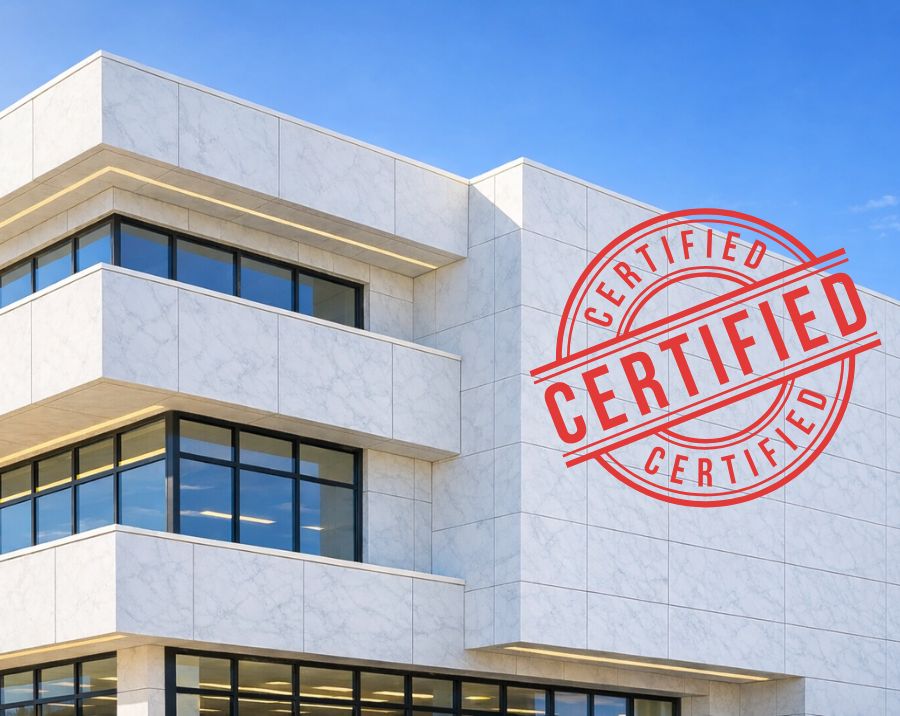
Certified Excellence: Exploring the Full Range of Alforce's Quality and Safety Credentials
Certifications might not get your pulse racing, but stick with me here. When you're selecting materials for a hospital facade or a municipal building, you're making a decision that'll affect that structure for the next 20 years. You need actual proof that the panels will deliver what's promised, not just smooth sales talk. That's where certifications come in—they're independent verification that our panels perform as claimed.
Why Certifications Matter More Than You Think
We get calls sometimes from contractors in tight spots. Project's underway, panels from their supplier have arrived, and something's wrong. Maybe the fire resistance doesn't match specifications. Or the coating starts deteriorating within weeks of installation. Suddenly they're facing failed inspections, potential rework, or in worst cases, removing everything already installed and starting fresh.
Nobody wants to be in that position. Certifications exist to prevent exactly these scenarios. They mean independent labs have put our panels through rigorous testing under controlled conditions and verified they meet defined standards. When we state our panels have specific fire resistance properties or coating durability, those aren't marketing statements—they're verified, documented facts backed by test data.
For architects and builders, this removes uncertainty. You specify our panels knowing they'll clear inspections. For building owners, it means your investment performs as expected throughout its lifespan.
The Quality Standards We Live By
Alforce manufactures aluminum composite panels conforming to both ASTM (American Society for Testing and Materials) and EN (European Norms) standards. These globally recognized benchmarks cover everything from coating adhesion to weather resistance to structural integrity.
Why bother with international standards when we're manufacturing in India for Indian projects? Because these standards have proven themselves. They come from decades of research, testing on actual buildings, and analyzing what worked and what failed across different climates and conditions. They're not administrative requirements invented to create paperwork—they're practical guidelines distilled from real-world experience about what holds up over time.
Consider our PVDF coating. PVDF (Polyvinylidene Fluoride) that meets these international specifications handles fading, chalking, and chemical exposure far better than standard paints. In Kerala's challenging climate—you've got intense sun beating down, heavy monsoons pouring in, and humidity that never really lets up—coating performance is what separates a building that looks maintained from one that looks neglected after five years.
Projects like Simons Eye Hospital across Thrissur, Perambra, and Vadakara, or Palakkad Municipality Town Hall needed panels that would maintain appearance year after year. PVDF coating conforming to international standards delivers that durability.
Fire Safety: The Non-Negotiable
Fire safety represents probably our most critical certification. Our FR class A2+ ACP panels meet among the highest fire resistance standards available for aluminum composite panels.
Here's the thing about building codes and fire safety requirements: they weren't dreamed up in some office. They exist because fires happened, people studied what went wrong, and regulations were updated to prevent the same mistakes. When you're working on facilities like Mediore Medicity in Balussery or Malabar Medical College in Ullery, fire resistance matters in ways that go beyond paperwork.
Class A2+ classification means our panels have limited combustibility. They don't add much to fire load, produce minimal smoke, and won't create flaming droplets or particles that spread fire elsewhere. In a fire situation, every minute of evacuation time counts. Materials that don't accelerate fire spread buy precious time.
For commercial projects like Nanthilath's locations in Thiruvalla and Thrissur, or municipal shopping complexes in Olavakkode and Koilandy, fire safety protects both the people inside and the investment itself. Building owners can rest easier knowing they've gone beyond just meeting minimum requirements.
The Manufacturing Standards That Back Everything Up
Certifications begin at the source—with raw materials we use and manufacturing processes we follow.
We purchase raw materials exclusively from certified vendors. This isn't convenience—it's about traceability and consistency. If an aluminum batch or coating material doesn't meet specifications, it doesn't enter our facility. No exceptions.
Our Kolar, Bangalore manufacturing plant spans 80,000 square feet with cutting-edge equipment. Equipment matters, certainly, but it's how you run your processes that determines output quality. We've integrated quality checks throughout production, not just at the end.
Here's why: wait until a panel is finished to check quality, find a problem, and you've already consumed the materials, the time, the labor. Everything's wasted at that point. Build checks into multiple production stages, and you spot issues when they're still correctable. Consistency improves across every panel that leaves the facility.
This manufacturing approach directly benefits projects like Kalyan in Vakakkanchery or Alur Curiees in Chalakudy, Thrissur. When you order from us, you're getting panels from a facility that takes quality seriously throughout production, not just at final inspection.
The Engineering Heritage Behind Our Standards
Our background as Supertech Engineers makes a tangible difference here. Since 1990, we've handled construction and EPC projects. We've witnessed materials fail firsthand, seen certifications prove meaningless, watched shortcuts create nightmares down the line.
That experience fundamentally shaped our approach to manufacturing ACP panels. We're not simply panel producers—we're engineers who've specified materials ourselves, dealt with project delays from substandard supplies, and had to explain to clients why something didn't perform as promised.
Establishing Alforce meant bringing that engineer's perspective into every production aspect. Quality standards aren't external impositions—they're embedded in how we think about the product. Our team includes over 200 engineers understanding that certifications represent real-world performance requirements, not abstract benchmarks.
This matters profoundly for sensitive projects. The three Simons Eye Hospital locations or Mediore Medicity aren't just buildings—they're healthcare facilities where performance failures carry serious consequences. The engineering rigor underpinning our certifications gives architects and builders confidence they're making sound material decisions.
Environmental Certifications and Responsibility
Quality and safety certifications matter, but there's more to consider. Environmental responsibility shapes how we manufacture.
Our panels are 100% recyclable. Aluminum maintains its properties through repeated recycling. With construction waste and environmental impact growing as industry concerns, this characteristic carries increasing weight.
Our manufacturing process targets reduced carbon emissions and responsible waste management. We're building circular production models where one process's waste becomes another's input material. These aren't distant plans—implementation is underway.
We've run plantation drives for over 15 years and feed street animals regularly in our area. This connects to certifications more than it might appear. The discipline behind maintaining quality certifications extends to environmental and community responsibilities.
For municipal projects like the town halls and shopping complexes we've worked on, or healthcare facilities serving communities, environmental responsibility forms part of the larger responsibility these projects represent.
What This Means for Your Project
Certifications translate into practical project benefits:
Faster Approvals: Materials meeting recognized standards make building inspections smoother. Inspectors understand ASTM, EN, and FR A2+ standards. Compliance verification happens quickly.
Insurance Benefits: Insurance companies frequently offer better rates for buildings using certified fire-resistant materials. The risk profile simply decreases.
Longevity: Panels meeting coating and durability standards maintain appearance longer. Shopping complexes or hospitals won't need exterior renovations for years.
Liability Protection: If problems arise, documented certifications demonstrate due diligence. You specified materials meeting recognized standards.
Performance Confidence: You understand material behavior because it's been tested. No surprises during or post-installation.
The Continuous Improvement Commitment
Certifications aren't static achievements—they're ongoing commitments. Standards evolve as research progresses and materials science advances. We maintain certifications through continuous compliance, not one-time testing.
Our R&D center works on improving panel performance, exploring new coating technologies, testing enhanced fire resistance methods. As standards become more stringent, we're already addressing future requirements.
This forward-looking approach benefits every project using our materials. Municipalities, hospitals, and commercial spaces using our panels today receive materials designed with tomorrow's standards already considered.
The Bottom Line
Certifications appear technical on paper. What they actually represent is accountability—we're backing specific performance claims with our reputation. Independent labs conducted the testing. Documentation exists to verify results.
For projects we've completed across Kerala—from Thrissur to Kozhikode, town halls to eye hospitals—certifications translated to smooth execution, inspections that cleared without complications, and buildings performing reliably years afterward.
That's certified excellence in practice: not ticking compliance boxes, but delivering performance that justifies the confidence architects, builders, and building owners place in their material choices.
When evaluating materials for your next project, look beyond marketing language. Ask about certifications. Verify they meet recognized standards. Today's specifications determine how that building performs for the next several decades.
Need to discuss certifications and standards for your specific project? Our technical team can explain what different certifications mean for your application. Call +91-11-45041391 or email info@alforce.com.


